Every car a job of its own
Each vehicle in a movement is allocated separately to a named driver and tracked through the day on the dispatch board, so one late car is seen and dealt with before it becomes three.
Several cars, several chauffeurs and one schedule, run from the control room by a controller who can see where every car is.
Some bookings are not one car. A premiere with talent arriving from three hotels, a conference moving speakers between a venue and a dinner, a production that needs its principal cast collected at dawn and taken home after wrap each of these is a set of movements that have to happen in the right order, and the risk is never any single car. It is the gap between them: the second car that was not told the first one is running late.
That gap is what the control room is for. Every car in a movement is its own job on our dispatch board, and a controller puts a named driver against each one by hand. Nothing is broadcast to whichever driver happens to be nearest. The board lists uncovered work first, so a car without a driver is the first thing a controller sees rather than something discovered at the call time. Once the cars are out, each chauffeur marks the job as they go and the controller watching the board can see which car is where and move the others to suit.
Most of this work is booked as a multi-day diary rather than as individual journeys. A diary gives you one named chauffeur for the whole of it, ten hours a day as standard, with accommodation and the congestion charge included. For a shoot week or a three-day event that means the same person in the same car every morning, who by the second day knows the unit base, the green room entrance and which door the talent actually uses.
Plans on these jobs move more than most. A call time slips, a location changes after lunch, somebody wants to go on to a second venue after the first. A movement can be amended while the car is on the road, and it is re-priced on the same fare model as the original booking rather than by a figure somebody thought of on the telephone. What was quoted and what it became are both kept, so the production accountant can see the step between them.
The cars do different jobs on a unit. The V-Class is the workhorse for crew and kit: seven seats, and room behind the rear row for cases, camera equipment or samples to stand upright. The saloons carry talent and principals, and the EQS suits a production that reports its travel emissions and wants the mileage per journey for its return. Close-protection-trained chauffeurs are available on request; say so when the job is planned, because it is a question of which chauffeurs are allocated to it, and that is settled on the board before the day, not on the morning.
Each vehicle in a movement is allocated separately to a named driver and tracked through the day on the dispatch board, so one late car is seen and dealt with before it becomes three.
Shoot weeks and multi-day events go on one diary: the same chauffeur each day, ten hours as standard, accommodation and the congestion charge inside it.
A location that moves mid-afternoon is amended on the booking and re-priced by the same engine, with the original quote kept alongside for whoever reconciles it.
Each car becomes its own job with a named driver put against it by hand, and anything still uncovered sits at the top of the list.
Principal cast are collected at dawn, and each chauffeur marks the job on the way and then arrived.
As each car reports its passenger aboard, the controller can see where the whole movement stands and shift the others to suit.
A new location or a second venue is amended on the booking with the car still out, and re-priced on the original fare model.
The principals are taken home, and the quoted and final figures both stay on file for the production accountant.
On a diary, whoever drove yesterday comes back already knowing the unit base and the door the talent uses.
Each figure is the lowest the booking form quotes for that hire on an ordinary day, with 20 miles included for every hour booked. A night, a bank holiday or the congestion charge adds what it adds, and is shown before you confirm; VAT at 20% is added on top. Price your own journey and the figure you are shown is the figure you pay.
Put the two addresses into the booking form. The fare comes back on the measured distance, not off a table, and it is the fare you pay.
Choose the vehicle and the booking type, give us the flight number if there is one, and pay or put it on the account.
His name, photograph and registration reach you the evening before. His live position reaches you on the morning.
On an airport pick-up he is inside the terminal at the barrier, not in a car park. Delays are absorbed by us, not billed to you.
Each car is a separate job on the control room's dispatch board, with its own driver allocated by a controller. The chauffeurs update their jobs as they go, so the controller can see which cars are waiting, which are loaded and which are still on the road, and ring whichever driver needs to change plan.
Yes, and that is what the multi-day booking is for: one named chauffeur for the whole diary. If the unit needs more than one car, each car keeps its own chauffeur across the days rather than whoever is free.
On request. Tell the controller when the movement is being planned rather than on the day, so that the job is covered by a chauffeur with that training from the outset.
The saloons usually will. The V-Class and the Range Rover are both too tall for the lower barriers many London basements use, so give us the venue address when you book and the controller will check the clearance and plan a set-down at street level if needed.
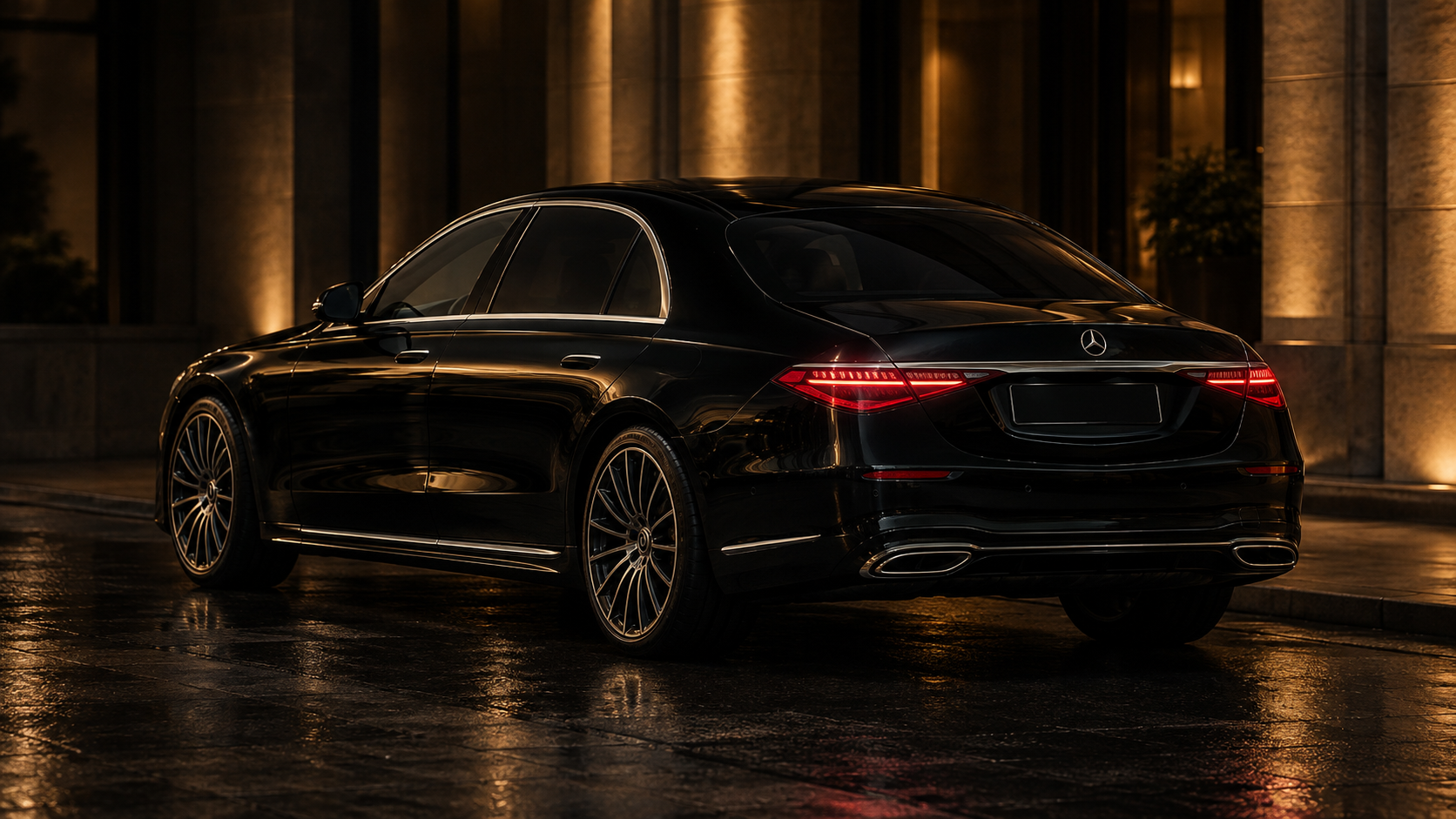
The standing choice for airport and executive work. Rear seats recline, the cabin is quiet at speed, and the partition glass is available on request.
3 PASSENGERS · 3 BAGS · FROM, EX VAT £55/HR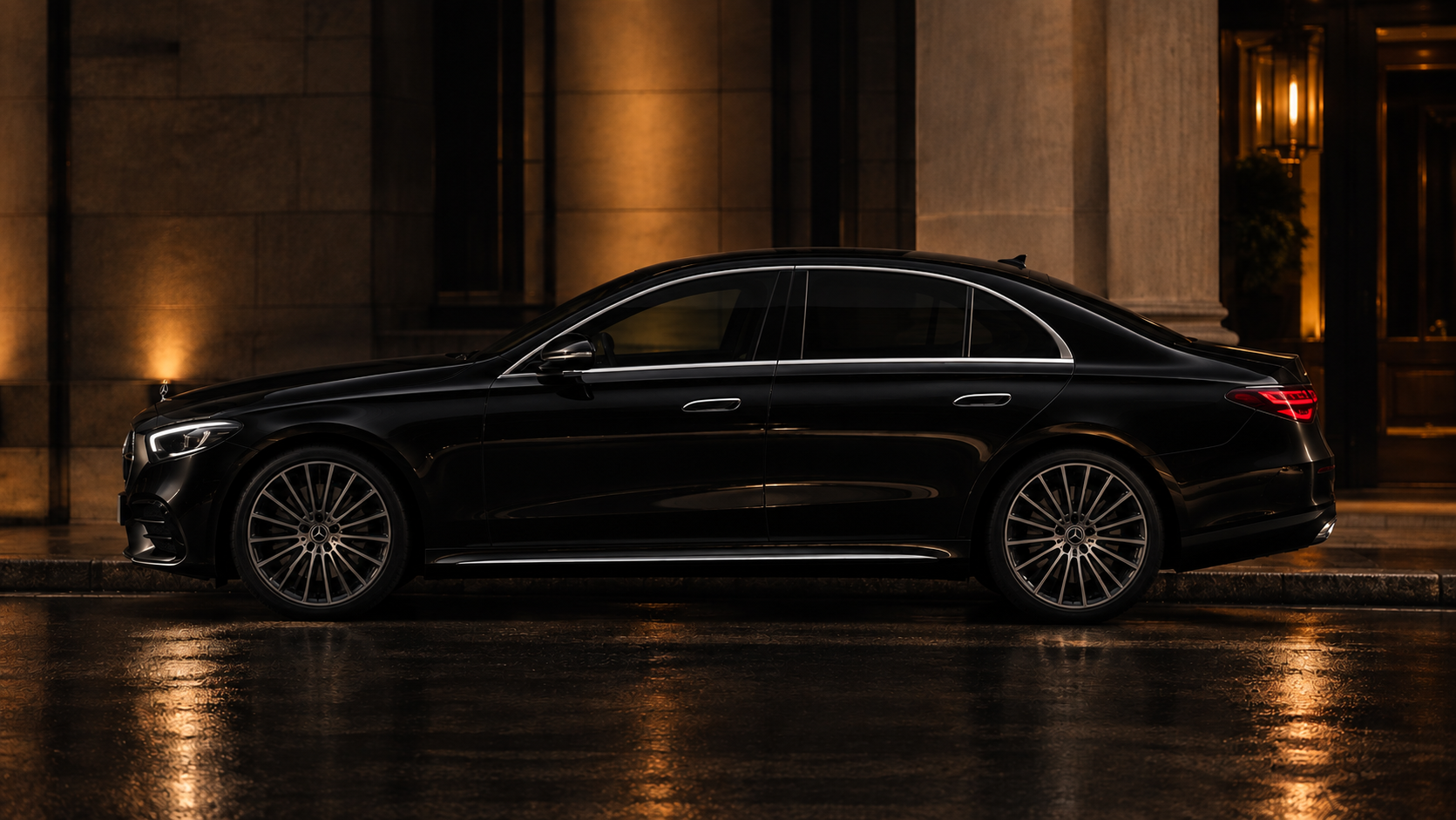
A shorter, faster car for city movements and single-passenger runs where the S-Class would be more than the journey needs.
3 PASSENGERS · 2 BAGS · FROM, EX VAT £45/HR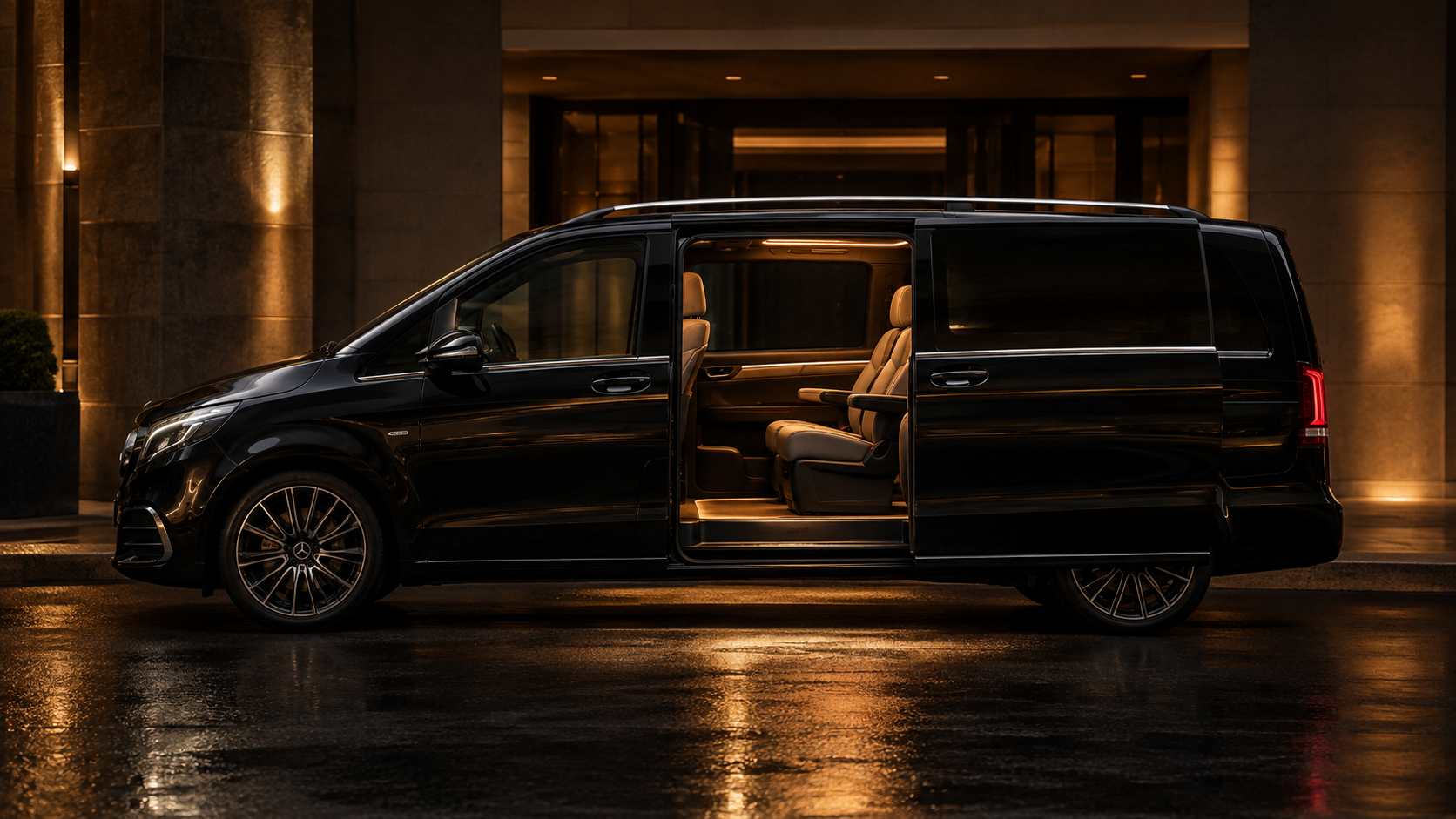
Conference seating, a folding table and full standing luggage capacity. The car we send when a party travels together and wants to keep talking.
7 PASSENGERS · 7 BAGS · FROM, EX VAT £55/HR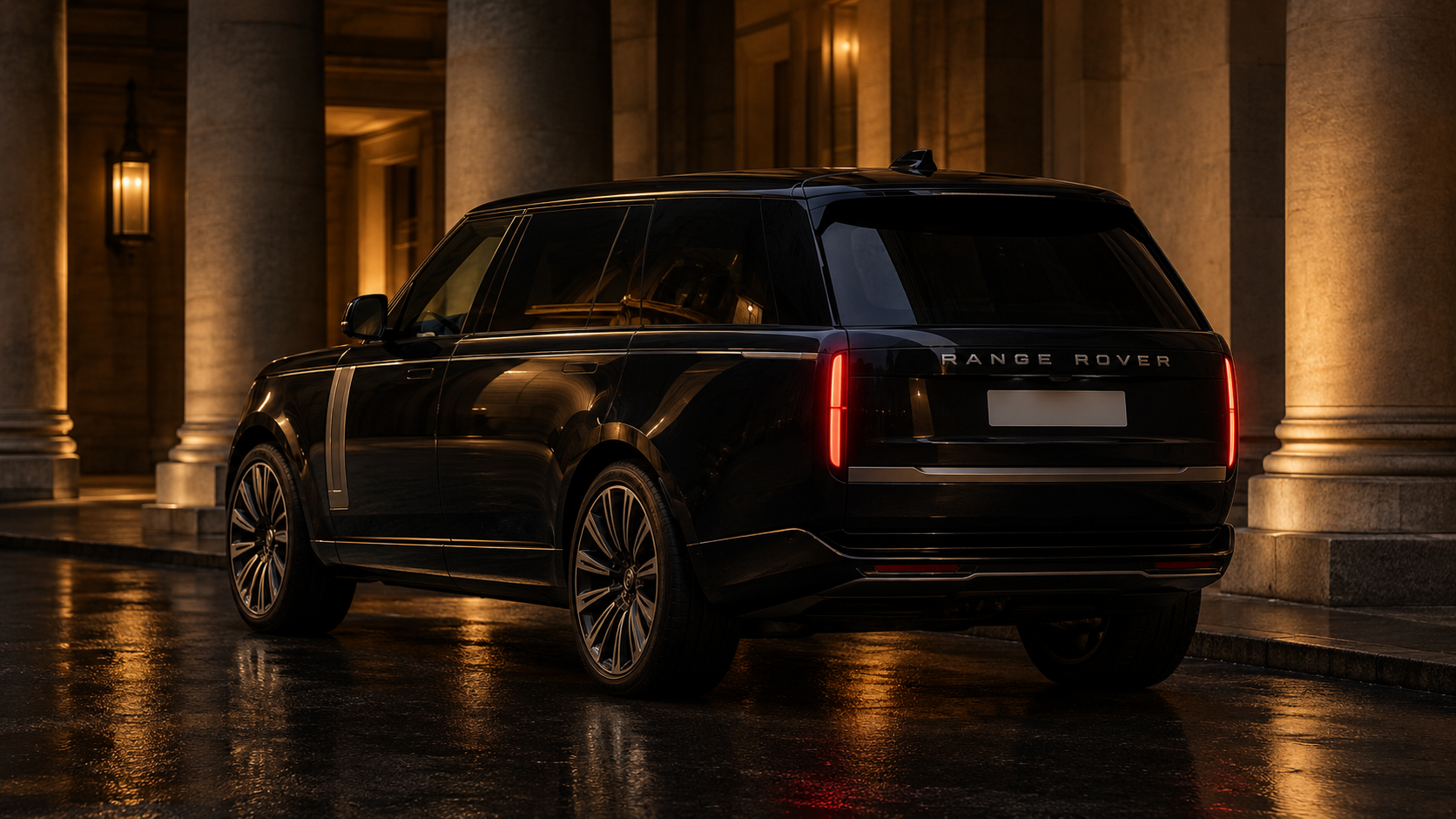
A raised, long-wheelbase SUV for country work and poor weather, with the rear cabin of a saloon. The car to send when the road at the far end is not a London street.
4 PASSENGERS · 4 BAGS · FROM, EX VAT £85/HR