Preferences asked for once
The controller holds how each traveller likes the car, and every booking inherits it. The assistant making the booking does not have to remember, and the principal in the back does not have to explain.
A named controller who knows how your people like to travel, one bill a month rather than a card payment per journey, and a record of every booking the firm makes.
A corporate account here is two things, and it is worth keeping them apart. The first is a working relationship with the control room: a named controller who runs your firm's movements, holds the preferences of the people who travel on the account, and will take a week's diary by email or telephone and turn it into bookings. The second is the online account each booker signs into, where those bookings can be seen, repeated and cancelled.
Preferences are recorded once. The temperature in the back, the route a director would rather not take, the water, the newspaper. These apply to every car sent after that, so an assistant booking on somebody's behalf never has to repeat them and a chauffeur never has to ask. The control room keeps its own notes against an account for whoever is on shift next. Those are working notes for the people running the job, and they never appear on a receipt, in an email or on anybody's account page.
Most account work is a car held at the door between meetings rather than a single run across town, which is why the button on this page opens the booking form on hourly hire. A day of three client visits and a lunch is one booking, priced on the hours, not four separate journeys each with a car to find at the end of it.
Billing is consolidated monthly, with cost-centre reporting, in place of a card payment taken journey by journey. Every movement still carries its own reference and an itemised fare fixed before it was confirmed. When a journey changes after booking the figure originally agreed stays on the record beside the one the journey came to. Whoever reconciles the month can see both numbers and the step between them, rather than a total that has quietly moved.
Signing in needs no password: a link sent to the inbox, or a Google account. Once in, a booker sees what is coming up and what has already run, and can book any past journey again with its details filled in. Anything priced while signed in but not yet booked is kept, so a quote begun on a phone in a lift is waiting on the desk later, re-quoted at that day's prices when it is picked up. Addresses are learned from where the account has actually been driven, most-used first, and offered at the top of the list next time; the office, the usual hotel and the airport stop being typed out.
Each online account belongs to one person and is identified by one email address. That is deliberate, and it is what keeps one colleague's diary off another colleague's screen. An assistant booking for several principals does so from their own sign-in and sees everything they have arranged. Bookings are found by the address on them as well as by the account, so journeys booked at an address before its account was opened are adopted automatically when it is.
There is a review form on the account for any completed journey, or for the service in general. It is read by a person in the office and answered by email if you ask. When somebody leaves the firm, their account can be closed from the same page: the name, telephone number, saved addresses and saved quotes are removed within thirty days, and journeys already run remain only as a commercial record, detached from the individual.
The controller holds how each traveller likes the car, and every booking inherits it. The assistant making the booking does not have to remember, and the principal in the back does not have to explain.
Consolidated monthly billing with cost-centre reporting, in place of a card receipt per journey. Each line still has its own reference and its own itemised fare.
Upcoming and past journeys, quotes priced but not yet booked, and the addresses actually used, kept against each person's own sign-in. Any past journey can be booked again from the list.
Emailed or rung through to the controller.
Recorded once, never asked again.
One hourly booking, not four journeys.
Agreed and final figures, side by side.
Each figure is the lowest the booking form quotes for that hire on an ordinary day, with 20 miles included for every hour booked. A night, a bank holiday or the congestion charge adds what it adds, and is shown before you confirm; VAT at 20% is added on top. Price your own journey and the figure you are shown is the figure you pay.
Put the two addresses into the booking form. The fare comes back on the measured distance, not off a table, and it is the fare you pay.
Choose the vehicle and the booking type, give us the flight number if there is one, and pay or put it on the account.
His name, photograph and registration reach you the evening before. His live position reaches you on the morning.
On an airport pick-up he is inside the terminal at the barrier, not in a car park. Delays are absorbed by us, not billed to you.
No. Each person who books signs in with their own email address, and sees the bookings made from it or made at that address. It keeps one person's movements private from another's, and it means someone leaving the firm is one account closed rather than a shared password changed.
Yes. Email or ring your controller with the diary and they build the bookings in the control room, through the same booking system the website uses so the confirmations arrive in the same form and the bookings appear on the account the same way.
The journey is re-priced on the same rules it was quoted on, and both figures are kept: what was agreed at booking and what the amended journey came to. The account page shows the new figure with the original beneath it, so nothing on the monthly bill arrives unexplained.
From the account page, free of charge, up to four hours before the car is due. Inside four hours, ring the control room and a controller will stand the car down; by then a chauffeur has usually been named to it.
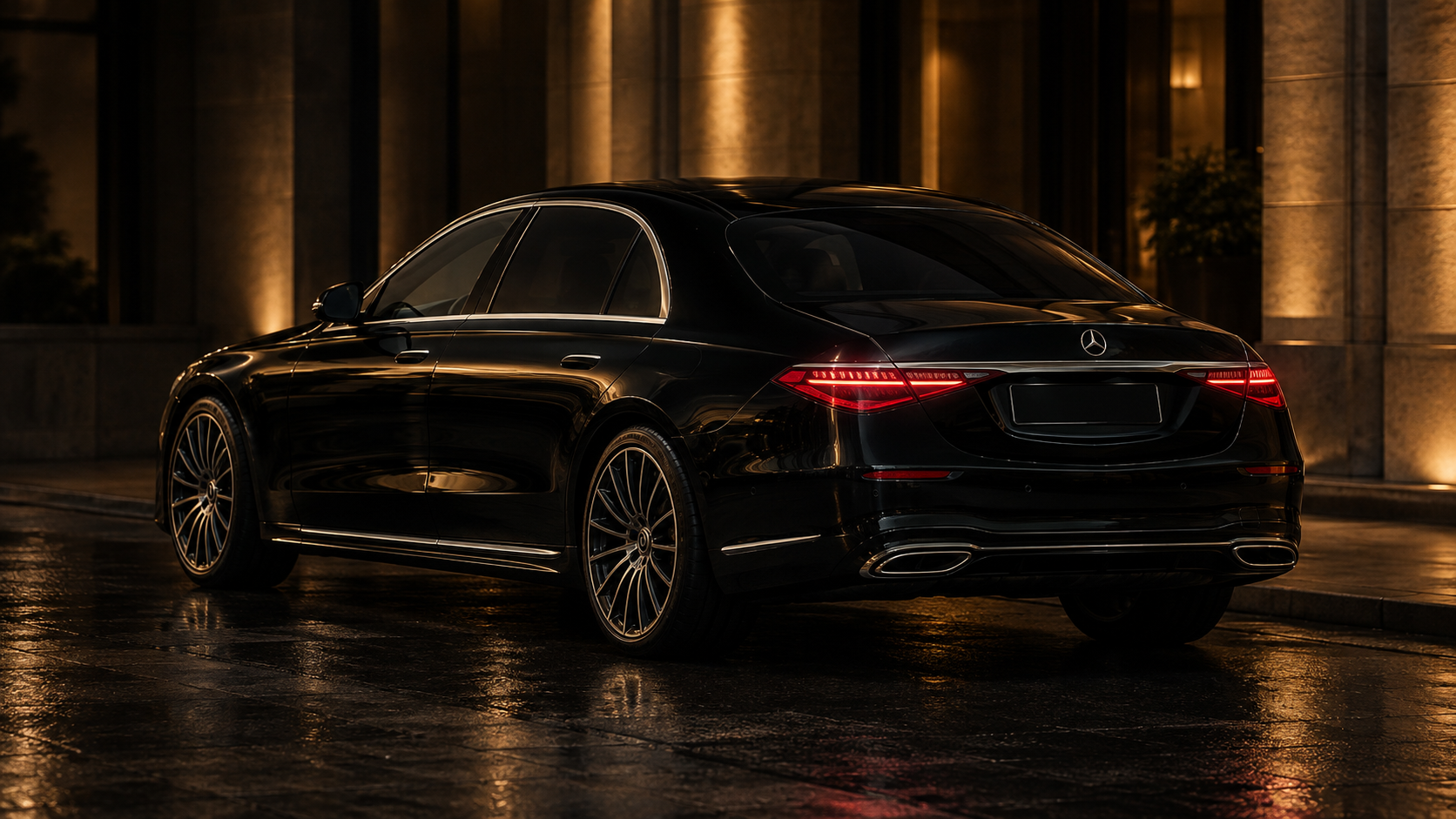
The standing choice for airport and executive work. Rear seats recline, the cabin is quiet at speed, and the partition glass is available on request.
3 PASSENGERS · 3 BAGS · FROM, EX VAT £55/HR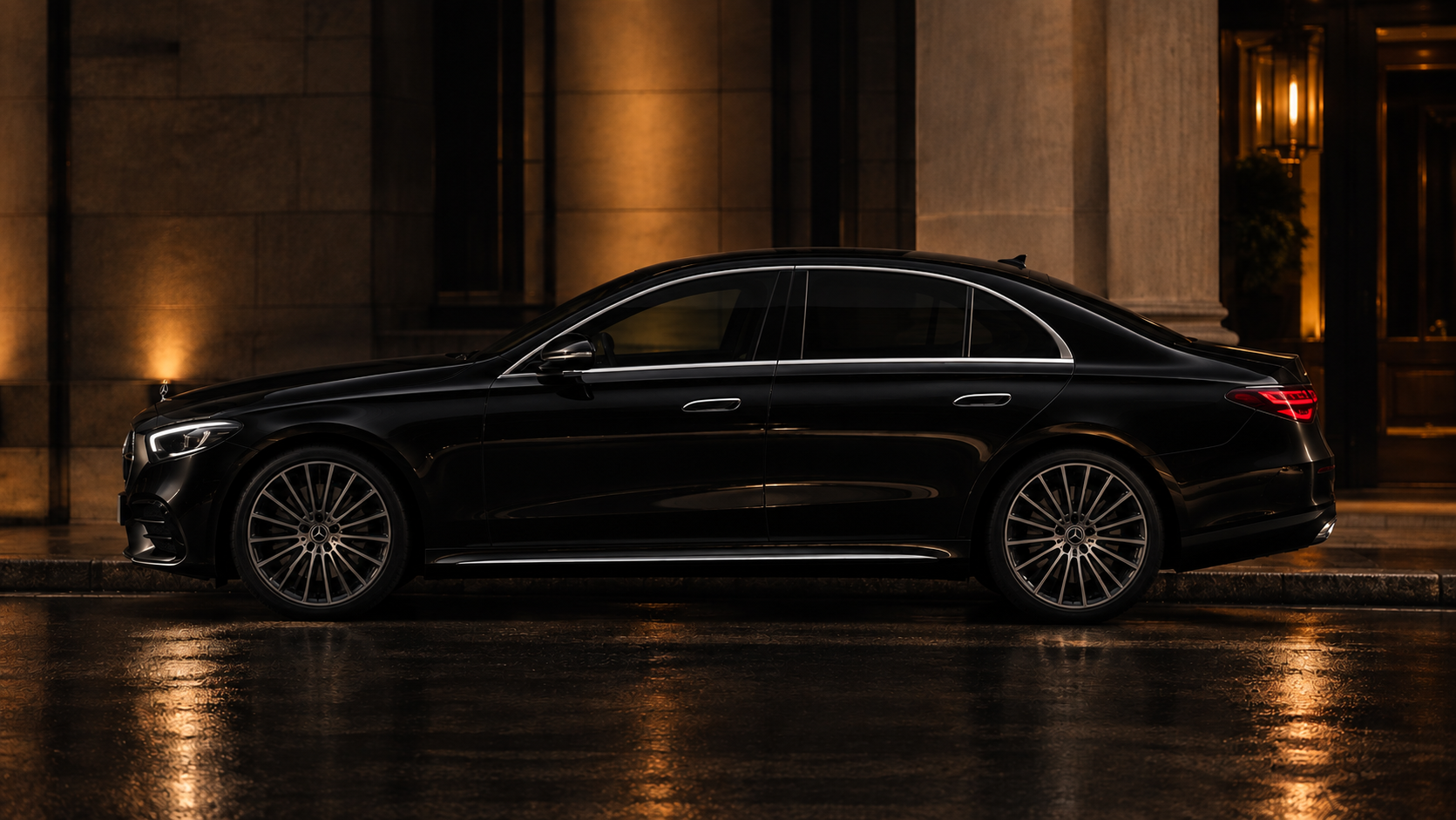
A shorter, faster car for city movements and single-passenger runs where the S-Class would be more than the journey needs.
3 PASSENGERS · 2 BAGS · FROM, EX VAT £45/HR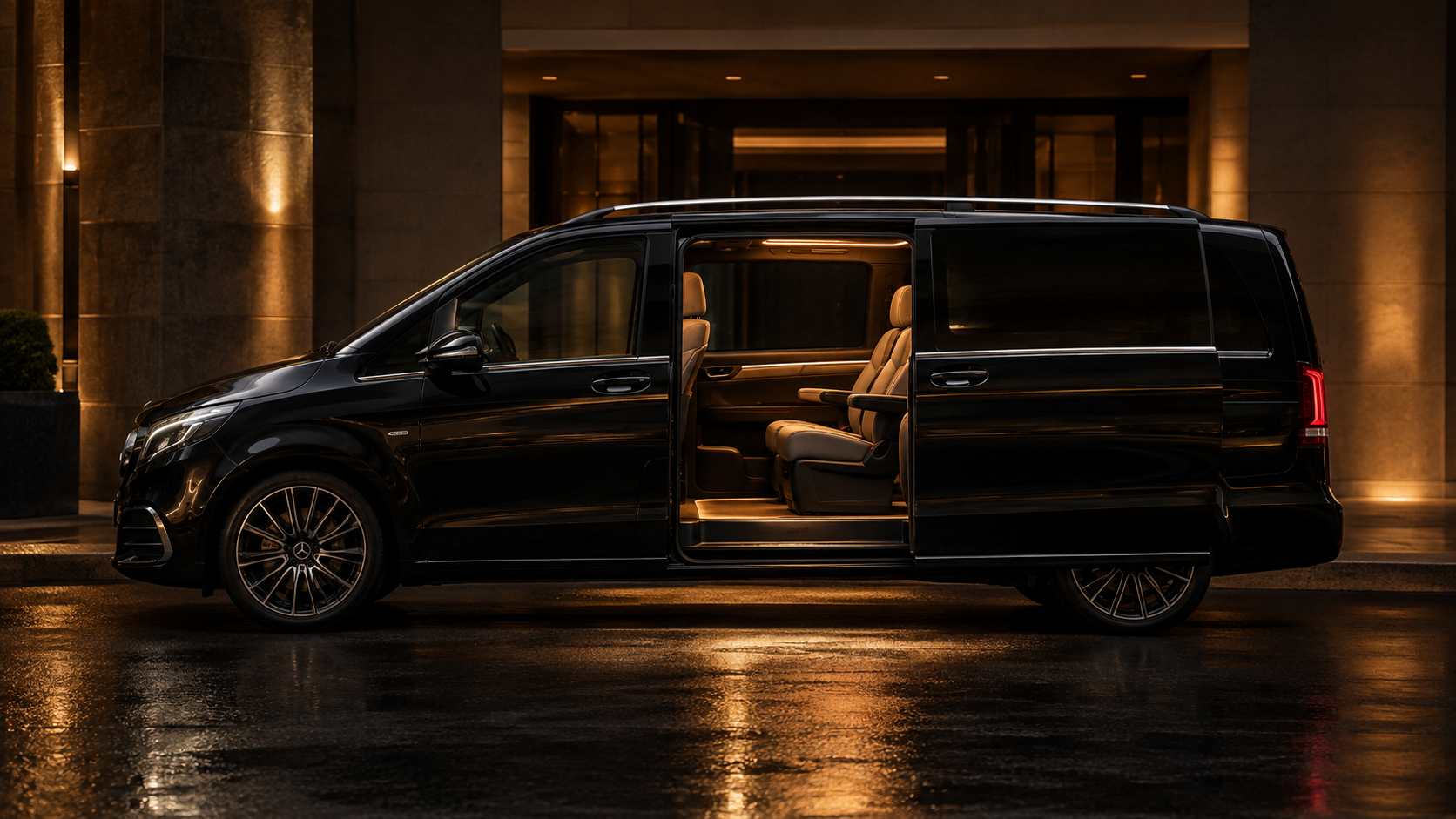
Conference seating, a folding table and full standing luggage capacity. The car we send when a party travels together and wants to keep talking.
7 PASSENGERS · 7 BAGS · FROM, EX VAT £55/HR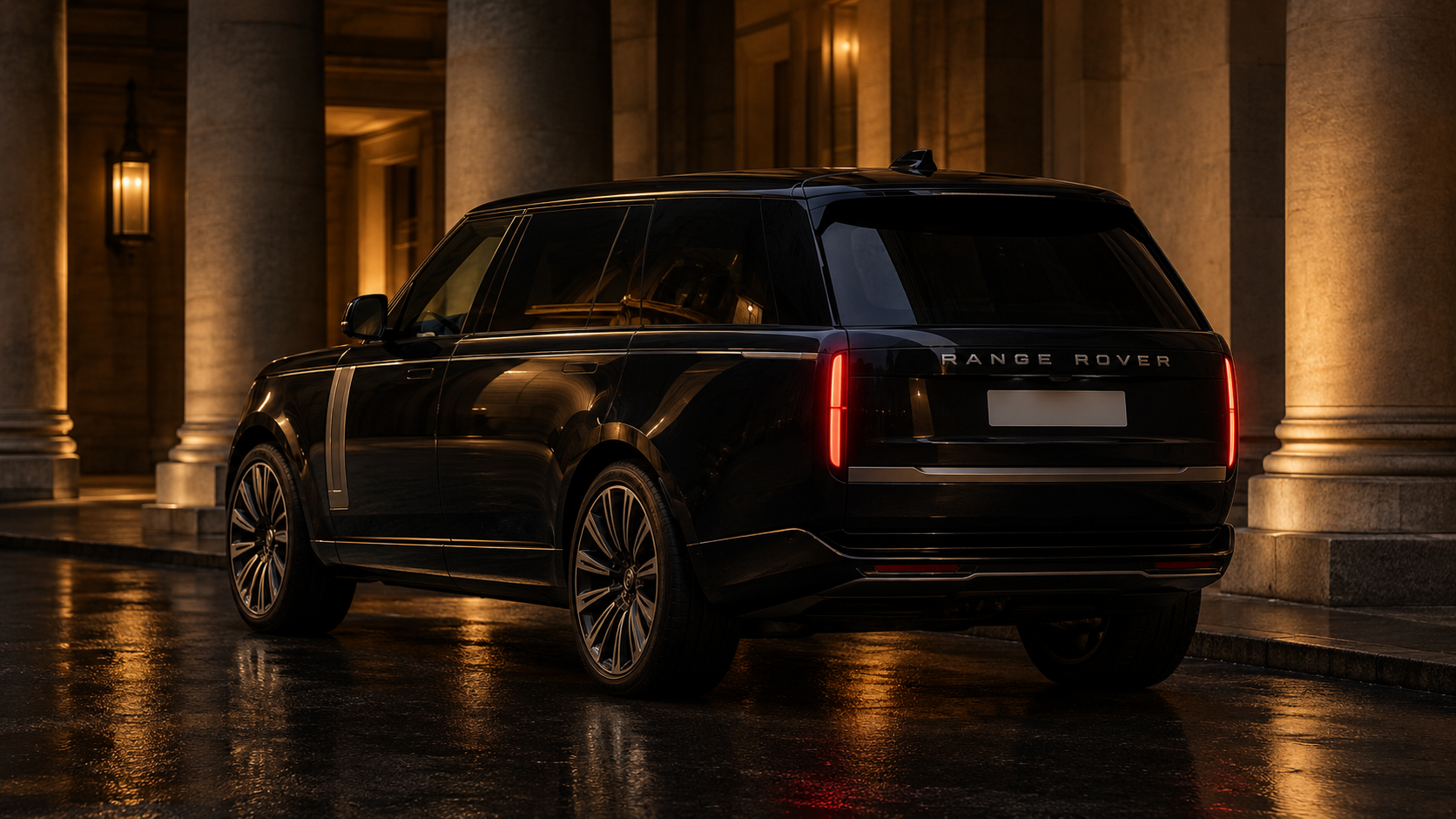
A raised, long-wheelbase SUV for country work and poor weather, with the rear cabin of a saloon. The car to send when the road at the far end is not a London street.
4 PASSENGERS · 4 BAGS · FROM, EX VAT £85/HR